
Our Board of Trustees
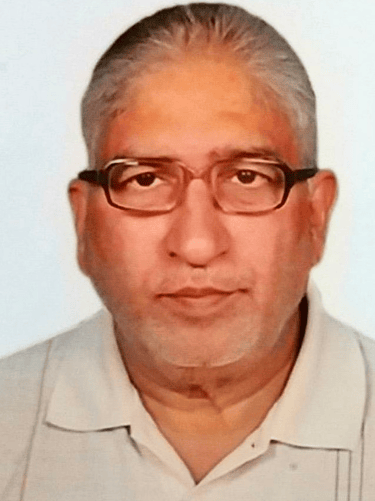
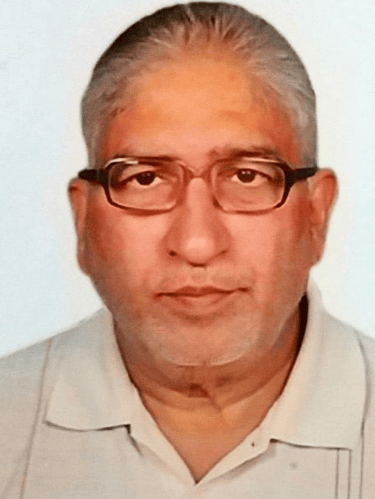
Prof. Ajit Kumar Hota, PhD (Ag.)
Trustee Member
Prof. Ajit Kumar Hota, an eminent agricultural scientist and development professional, has made significant contributions to agricultural research, extension, and sustainable farming in India. With a distinguished career spanning nearly four decades, he served the Odisha University of Agriculture and Technology (OUAT) in several key scientific and leadership roles, ultimately retiring as Professor and Senior Pathologist and later serving as Officer-in-Charge of the Centre for Pulses Research. Dr. Hota specializes in plant disease management, particularly in solanaceous vegetables such as brinjal and chilli, as well as in rice, pulses, and millets. Through his research and extension work, he has contributed to improving crop productivity, disease management practices, and resilient agricultural systems, especially in regions dependent on smallholder farming.
Throughout his professional journey, Dr. Hota has worked extensively in research, extension, and capacity building, bridging the gap between agricultural science and farmers’ needs in the undivided KBK districts. His work included frontline demonstrations, farmer training, and participation in Tribal Sub Plan programmes, helping to introduce improved crop management practices and strengthen food security among rural and tribal communities. His dedication to agricultural innovation and farmer-oriented research has earned him respect within academic, research, and farming communities. Dr. Hota’s work reflects a deep commitment to strengthening sustainable agriculture and supporting the livelihoods of rural farmers through scientific knowledge and practical field applications. Even after retirement, he continues to inspire younger researchers and development practitioners through his vast experience and commitment to advancing agriculture for the benefit of society.
Dr. Pabitra Kumar Panda, MBBS, MD (Dermatology, Venereology & Leprosy)
Trustee Member
Dr. Pabitra Kumar Panda is a distinguished dermatologist and Trustee Member of the Trust, with over 12 years of experience in clinical medicine and public health service. Throughout his career, he has worked across diverse healthcare settings ranging from rural community health initiatives to leading corporate medical institutions, reflecting his strong commitment to equitable healthcare delivery. Dr. Panda has been associated with organizations such as Tata Steel Rural Development Society, the Labour Welfare Organisation, and Tata Steel Hospital, where he contributed significantly to patient care and community health programs. He currently serves as a Dermatologist under the Government of Odisha, continuing his dedication to public healthcare services.
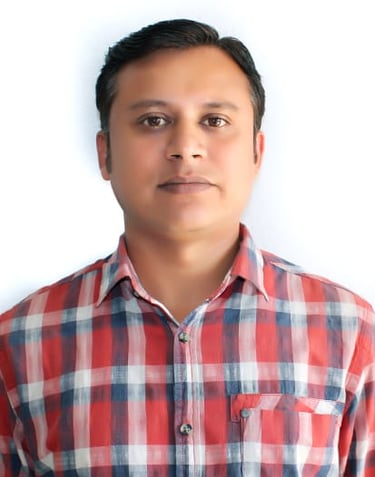
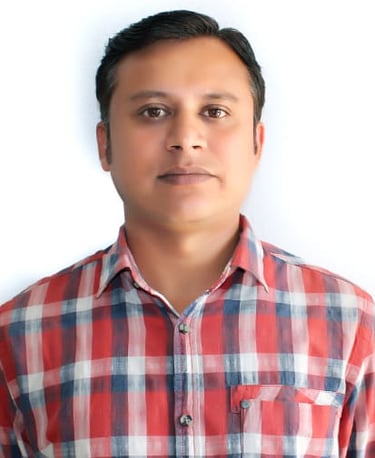
As the Founder of Dr Pabitra Panda Skin Clinic, Dr. Panda has been instrumental in providing specialized dermatological care, while also actively organizing free medical camps and awareness programs focused on skin and venereal diseases, particularly for underserved populations. A member of the Indian Association of Dermatologists, Venereologists and Leprologists, Dr. Panda has presented several research papers at regional and national conferences, contributing to the advancement of dermatological knowledge and practice. With a deep sense of social responsibility and a vision for inclusive healthcare, Dr. Panda remains committed to improving access to quality medical services and supporting initiatives that promote community well-being and sustainable health development.
Dr. Chita Ranjan Dash, PhD
Trustee Member
Dr. Chita Ranjan Dash is a distinguished economist, researcher, and development practitioner with extensive experience in social science research, rural development, and policy analysis in India. He served as a Senior Research Officer at the Nabakrushna Choudhury Centre for Development Studies (NCDS), Bhubaneswar, where he has been actively engaged in research, policy advocacy, and capacity building for over two decades. With more than 27 years of research and teaching experience, Dr. Dash has made significant contributions to the understanding of tribal development, forest governance, rural livelihoods, and socio-economic transformation.Dr. Dash began his academic journey with a Master’s degree in Economics from Berhampur University, later earning an LL.B from Utkal University and a Ph.D. in Economics from Utkal University. His interdisciplinary academic training enables him to examine development issues through both e conomic and legal perspectives.
Over the years, Dr. Dash has been involved in numerous research projects funded by national and international agencies, contributing to policy-relevant studies on agriculture, tribal livelihoods, labour, gender issues, and forest management. He has participated in over 39 externally funded projects and 18 internal research studies, addressing critical development challenges across Odisha and India. A prolific scholar, Dr. Dash has authored and co-authored more than 34 research articles in reputed journals and edited volumes, and contributed to several influential books on rural development, forestry, migration, and cooperative development. His research works such as Forest Resources and Its Management in India, Dairying and Rural Development, and Joint Forest Management and Sustainable Livelihood reflect his deep engagement with issues of natural resource governance and community development. Dr. Dash has also played an active role in academic forums and knowledge networks, participating in numerous national and international seminars, conferences, and workshops. He has delivered lectures and training sessions on topics such as forest rights, labour issues, research methodology, and sustainable development for institutions including the Gopabandhu Academy of Administration, universities, and research organizations.
In addition to research, Dr. Dash has contributed to policy dialogue and institutional capacity building. He served as Coordinator of the Special Programme for Promotion of Millets in Tribal Areas under the Odisha Millets Mission, supporting evidence-based policy interventions to strengthen food security and sustainable agriculture among tribal communities. Through his extensive research, policy engagement, and academic leadership, Dr. Chita Ranjan Dash has significantly contributed to advancing knowledge and action on tribal development, forest governance, gender equity, and sustainable livelihoods. His work continues to inspire scholars, policymakers, and development practitioners committed to building a more equitable and sustainable society.
Dr. Duttanjali Rout, M.Tech., PhD
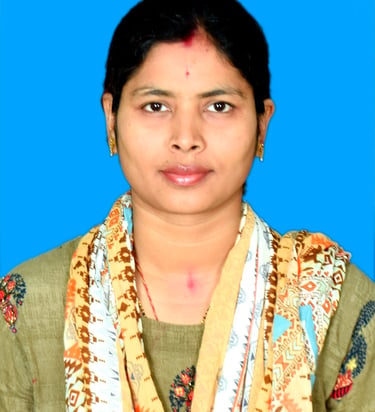
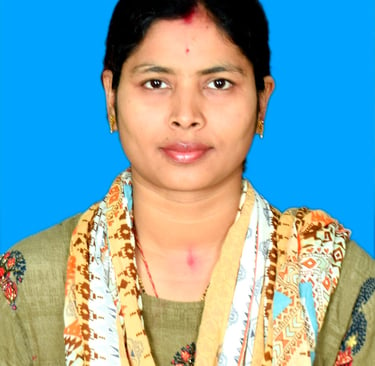
Dr. Duttanjali Rout is a geoscientist and academic with expertise in geology, earth system processes, and geochemical research. She holds a Doctorate in Geology from the Indian Institute of Technology (IIT) Kharagpur, where her research focused on crustal fluid processes and the geological evolution of giant quartz reef systems in the Bundelkhand Craton of India. Her work contributes to understanding mineral-forming processes, fluid dynamics in the Earth’s crust, and the geological factors influencing resource formation. Dr. Rout completed her M.Tech. in Exploration Geosciences from IIT Kharagpur and M.Sc. in Geology from Utkal University. Her academic journey reflects consistent excellence in earth science research and analytical studies. Her research experience includes advanced investigations using fluid inclusion microthermometry, Raman spectroscopy, and geochemical modelling to study geological formations and mineral systems.
Dr. Rout has published research papers in reputed international journals and presented her work at major scientific forums, including the American Geophysical Union (AGU) Fall Meeting in the United States and international conferences on fluid inclusion studies. Her academic engagement reflects a strong commitment to research, knowledge dissemination, and scientific learning. With her interdisciplinary understanding of geological processes, natural resources, and earth systems, Dr. Rout continues to contribute to scientific research and academic development in the field of geosciences and development in the society.
Mr. Goutam Kumar Mohanty, PGDDM, M.Phil.
Trustee Member
Mr. Goutam Kumar Mohanty is an experienced development professional with over two decade of engagement in social and rural development, specializing in livelihoods promotion, financial inclusion, community institution building, and programme monitoring and evaluation. His work has consistently focused on empowering marginalized and tribal communities through participatory development approaches and sustainable livelihood initiatives. He currently serves as a State Lead Consultant in a CSR of Odisha. Earlier to this, he as the State Level Programme Officer (Community Institutions & Rural Finance) and In-Charge Monitoring & Evaluation Officer for the Odisha PVTG Empowerment and Livelihoods Improvement Programme (OPELIP) under the ST & SC Development Department, Government of Odisha, supported by the International Fund for Agricultural Development (IFAD), the programme aims to strengthen livelihoods and institutional capacities among Particularly Vulnerable Tribal Groups (PVTGs). In this role,
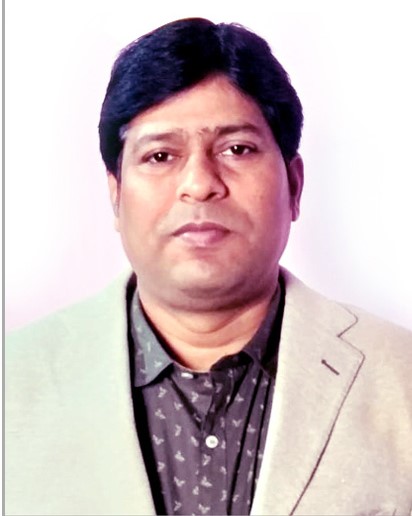
Mr. Mohanty lead initiatives on monitoring and evaluation, financial inclusion, SHG promotion, and partnership building with government departments, NGOs, and development agencies. Earlier, he served in key positions with the Odisha Tribal Empowerment and Livelihoods Programme (OTELP/OTELP Plus) and the North East Rural Livelihoods Project (NERLP), a World Bank-supported initiative, where he provided technical guidance on microfinance, community institutions, and livelihood development across multiple states. He also worked with the DHAN Foundation, promoting Self-Help Groups and community-based financial systems.
Mr. Mohanty holds a Master’s degree in Economics from the University of Hyderabad, an M.Phil. in Tribal Studies from Berhampur University, and a Post Graduate Diploma in Development Management from Tata-Dhan Academy. He is currently pursuing doctoral research in Economics at Utkal University. Through his professional and academic work, he continues to contribute to strengthening inclusive institutions and sustainable development initiatives.
Ms. Subhashree Paital, MSW
Trustee Member
Ms. Subhashree Paital is a dedicated development professional with over 12 years of experience in community development, programme management, and social welfare initiatives. With a strong commitment to improving the lives of vulnerable communities, she has worked extensively on livelihood promotion, gender sensitization, health and nutrition, child protection, and community empowerment across different regions of Odisha. Currently, Subhashree Paital serves as a Project Associate at the Nabakrushna Choudhury Centre for Development Studies (NCDS), Bhubaneswar, where she contributes to the Shree Anna Abhiyan, a special programme focused on the promotion of millets and sustainable agriculture in Odisha. In this role, she assists in conducting research studies, maintaining project records, and supporting programme implementation aimed at strengthening food security and sustainable livelihoods.
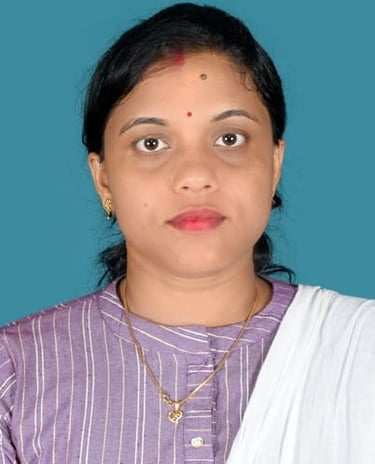
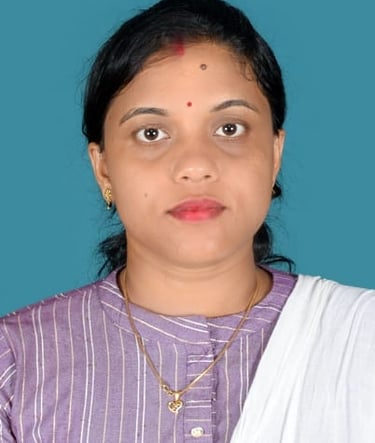
Earlier, she worked as a Project Manager under the Odisha PVTG Empowerment and Livelihoods Improvement Programme (OPELIP) implemented by the ST & SC Development Department, Government of Odisha. In this position, she played a key role in facilitating participatory village development planning, coordinating programme staff, strengthening community institutions, and promoting livelihood opportunities among Particularly Vulnerable Tribal Groups (PVTGs). Her work involved supporting natural resource management, improving agricultural practices, promoting micro-enterprises, and strengthening access to education, health, and social entitlements. Subhashree has also contributed to gender and child rights initiatives while working with the Social Organization for Voluntary Action (SOVA) on a UNFPA-supported programme aimed at creating gender-friendly Panchayats in Dhenkanal district. Her work focused on addressing critical social issues such as child marriage, domestic violence, school dropout, and gender discrimination through community awareness, stakeholder engagement, and coordination with government institutions. Her earlier experience includes working as a Community Counselor with Jhpiego, a global health organization affiliated with Johns Hopkins University, where she supported family planning and maternal health initiatives in several districts of Odisha. She also began her career as a Social Worker with the Association for Social Reconstructive Activities (ASRA), where she worked closely with Self-Help Groups and rural communities to strengthen livelihoods and grassroots institutions.
Academically, Subhashree holds a Master of Social Work (MSW) from BJB Autonomous College, Bhubaneswar, along with a Post Graduate Diploma in Computer Applications (PGDCA). Her professional strengths include programme planning, community mobilization, gender mainstreaming, team building, capacity development, and participatory monitoring systems. Through her extensive grassroots engagement and programme leadership, Subhashree Paital continues to contribute to inclusive development, social justice, and sustainable community transformation, making her an effective development practitioner committed to empowering marginalized communities.
Dr. Bijaya Kumar Nayak, PGDDM, MPhil, PhD.
Founder-Cum-Managing Trustee
Dr. Bijaya Kumar Nayak is a distinguished development professional, researcher, and practitioner with over fifteen years of experience in rural development, sustainable livelihoods, and agroecology. His work focuses on strengthening community institutions, promoting climate-resilient agriculture, and improving the socio-economic conditions of tribal and marginalized communities across India. Through his research and field engagement, he has consistently worked to bridge the gap between knowledge, policy, and grassroots development practice. Dr. Nayak holds a Ph.D. in Development Studies from the Nabakrushna Choudhury Centre for Development Studies (NCDS), Utkal University, and an M.Phil. in Tribal Studies from Berhampur University. He also holds Master’s degrees in Rural Development and Public Administration, along with a Post-Graduate Diploma in Development Management. In recognition of his academic excellence, he was awarded the prestigious ICSSR Fellowship and the Orange Knowledge Programme (OKP) Fellowship of the Government of the Netherlands.
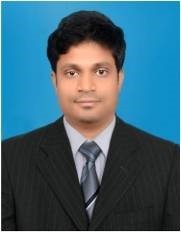
Over the years, Dr. Nayak has worked with several national and international institutions and development initiatives, including programmes supported by the Ministry of Tribal Affairs (MoTA), Department of Science and Technology (DST), United Nations Democracy Fund (UNDEF), International Development Research Centre (IDRC), and NABARD. He earlier served in the Odisha PVTG Empowerment and Livelihoods Improvement Programme (OPELIP) under the Government of Odisha, supported by the International Fund for Agricultural Development (IFAD). Dr. Nayak has coordinated and contributed to multiple national and international projects focusing on small millets, agro-biodiversity, nutrition-sensitive agriculture, community health, and women’s institutions. His work has extended across several states including Odisha, Jharkhand, Assam, Andhra Pradesh, Chhattisgarh, and Madhya Pradesh, benefiting thousands of rural households.
A prolific scholar, he has authored several research papers, policy briefs, and knowledge publications on millet-based farming systems, agroecology, and tribal livelihoods. His participation in global learning platforms, including a Netherlands Fellowship-supported programme on Climate Change Adaptation in Food Security and Natural Resource Management at Makerere University, Uganda, has further enriched his perspective on sustainable development.

Quick Link
JAGATI Foundation
G/L- 36, First Floor
Near Prabhujee E.M. School,
V.S.S. Nagar,
Bhubaneswar- 751007
Odisha, INDIA
Email: contact@jagatifoundation.org
Call: +91 7008756629